

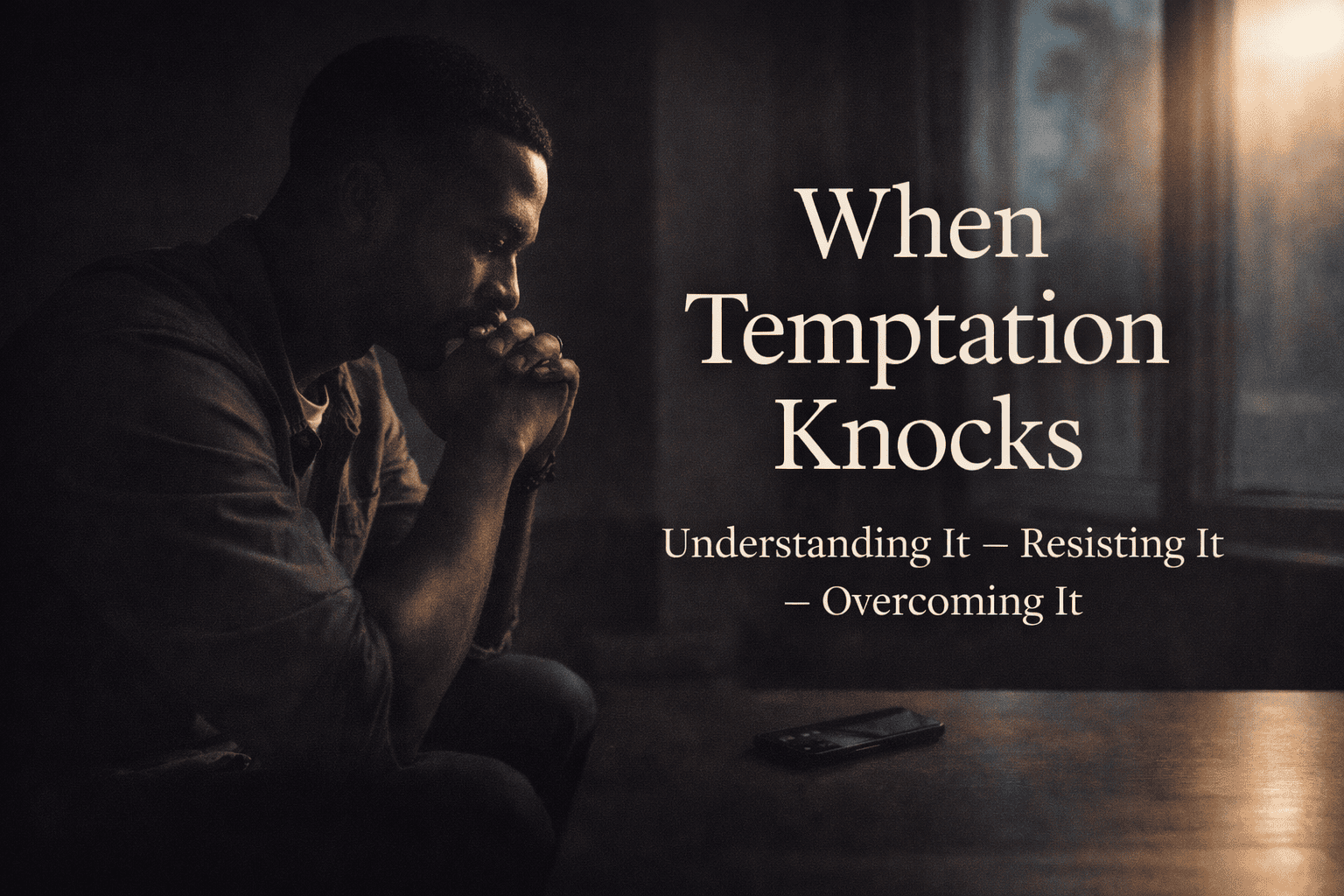
Temptation rarely announces itself dramatically. It doesn’t always look dark or dangerous. Often, it looks reasonable/justifiable and small and that is what makes it powerful.
The Bible is honest about temptation. It does not pretend that believers are immune to it. In fact, 1 Corinthians 10:13 reminds us that temptation is common to humanity but it also promises that God is faithful and will provide a way of escape. That means temptation is not a sign that something is wrong with you. It is part of being human in a fallen world. The issue then is not whether we are tempted but how we respond when we are tempted.
What Temptation Really Looks Like Today
When people hear the word “temptation,” they often think of obvious sins such as immorality, substance abuse, or dishonesty. But temptation shows up in quieter ways too. Some of them include:
- The urge to exaggerate a report at work to look better.
- The temptation to scroll into content you know weakens your purity.
- The pull to retaliate with sharp words when hurt.
- The quiet envy when someone else succeeds.
- The desire to cut ethical corners because “everyone else does it.”
- The subtle drift toward emotional attachment outside marriage.
Temptation is not always loud. Sometimes it’s simply a thought: “No one will know.” Or, “Just this once.” James 1:14–15 explains that temptation begins when we are drawn away by our own desires and if entertained long enough, it leads to sin. The process often starts internally long before anything external happens.
David’s Quiet Battle
Let’s imagine David (not the biblical king), but an ordinary man in today’s world. David loves God. He attends church and reads devotionals occasionally. In other words, he just wants to live right.
One evening after a long exhausting day, he sits alone scrolling through social media. An ad pops up. It’s not overtly sinful, just suggestive. He pauses and his mind whispers, “It’s harmless.” He clicks. One click becomes five and soon he’s consuming content he knows doesn’t honor God.
He closes the app feeling ashamed, telling himself that he won’t do it again. But the next stressful evening, the cycle repeats. David’s problem did not begin with the content. It began with isolation, exhaustion and unguarded habits. Temptation exploited a weak moment.
Likewise, many of us have our own version of David’s story. Maybe it’s anger instead of lust or maybe it’s dishonesty instead of envy but the pattern is similar. Temptation waits for moments of vulnerability.
Why Temptation Feels Strong
Temptation often targets unmet needs. It could be comfort, validation, escape, recognition or control. When those needs are not brought before God, we try to satisfy them in unhealthy ways. Even Jesus was tempted (Matthew 4). The enemy tempted Him in three key areas:
- Physical need (turn stones to bread),
- Pride and recognition (throw Yourself down),
- Power and control (all this I will give You).
Notice something profound: Jesus responded with Scripture every time. He did not argue emotionally but answered with truth. Temptation loses power when truth is present.
How Do We Overcome Temptation?
Overcoming temptation is not about stronger willpower alone. It is about wisdom, preparation and dependence on God.
1. Recognize Your Patterns
Be honest about when and where you are most vulnerable. Late at night? When tired? When lonely? Proverbs 4:23 says to guard your heart. You cannot guard what you refuse to acknowledge.
2. Remove Easy Access
If something consistently leads you toward sin, create distance. That might mean setting app limits, changing routines, or even seeking accountability. Jesus’ teaching in Matthew 5 about cutting off what causes you to stumble speaks to radical removal, not casual management.
3. Stay Rooted in the Word
Psalm 119:11 says, “Thy word have I hid in mine heart, that I might not sin against thee.” Scripture reshapes how we think and strengthens our conviction before temptation arrives.
4. Pray Before You’re in Crisis
Prayer builds inner strength before the storm hits. Jesus told His disciples to pray so they would not enter into temptation (Matthew 26:41). Notice He did not say temptation would not come. However, in the event that tempatations come, prayer prepares you to resist.
5. Replace, Don’t Just Remove
If you remove a bad habit but don’t replace it with something healthy, temptation returns stronger. For instance, replace idle time with meaningful activity, replace bitterness with gratitude or replace isolation with community.
6. Remember Grace
If you fall, do not stay down. Shame often keeps people trapped longer than the sin itself. 1 John 1:9 reminds us that if we confess, God is faithful to forgive and cleanse. Conviction leads you back to God while condemnation pushes you away. Learn the difference.
For Those in the Middle of the Battle
If you are fighting temptation right now, you are not uniquely weak. You are human. The enemy wants you to believe you are alone in your struggle. You are not.
Victory is rarely dramatic. It often looks like small, repeated choices to say no. It looks like closing the app, walking away from the conversation, refusing the bribe, choosing silence instead of revenge, deleting the number or turning your thoughts toward prayer instead of fantasy. Temptation may knock but it does not have to live in your house.
Over time, each resisted temptation strengthens your spiritual muscle and each surrender to God deepens your dependence on Him. You are not meant to fight alone. The same Spirit who raised Christ from the dead empowers believers to live in victory. The battle is real but so is the grace of God.